Holding Faith When Outcomes Are Unknown
During one of my classes, a moment of humor landed with unexpected weight.
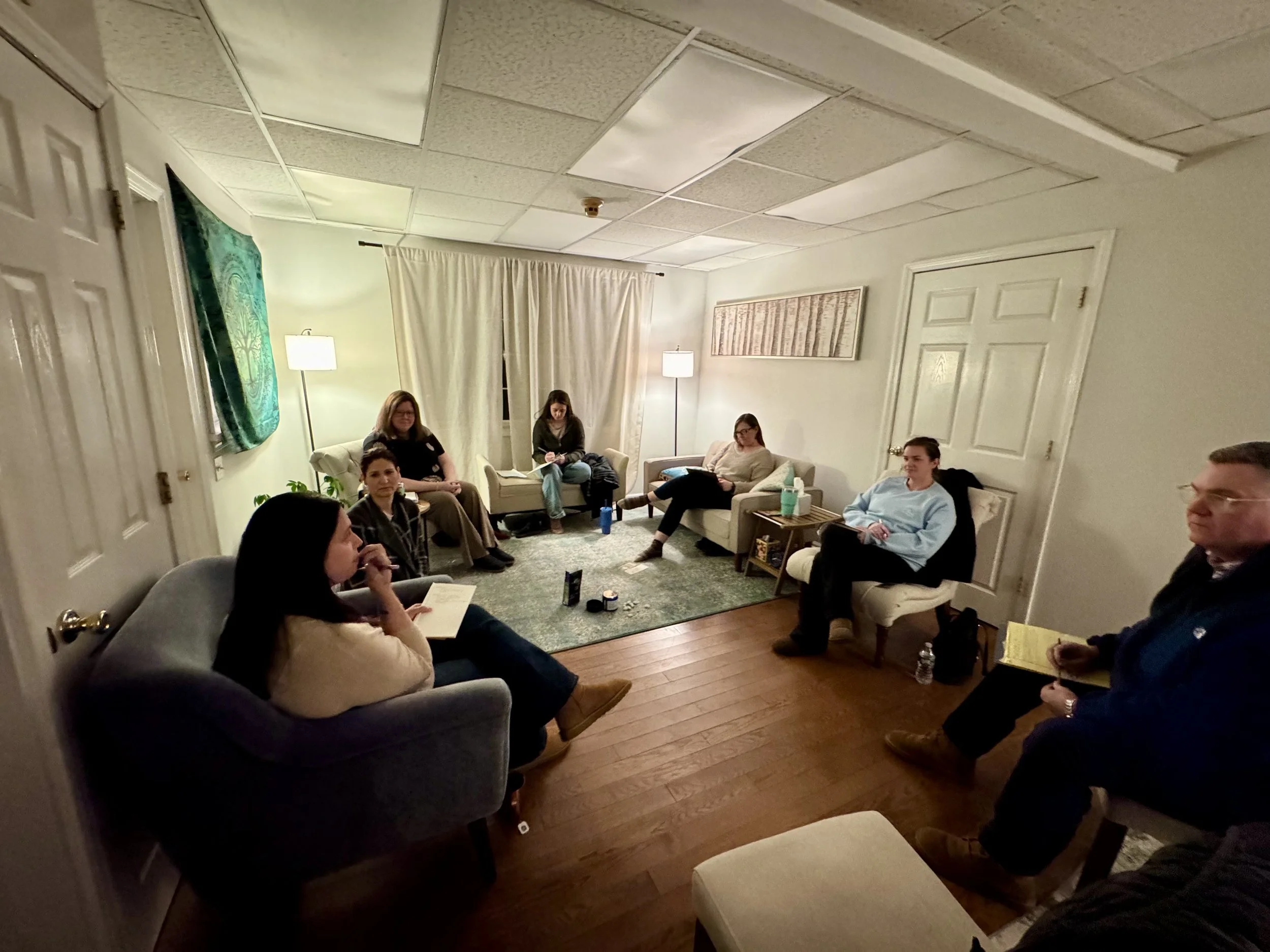
I had been sharing something I was currently manifesting and the anticipation of learning whether it would come to fruition. In a playful tone, someone commented that a psychiatrist might be needed if it did not happen. The room moved forward, yet the moment stayed with me.
What surfaced was not doubt in the process itself, but a quiet awareness of how easily hope can be misunderstood. Speaking openly about what we are calling into our lives requires a certain openness. It invites interpretation from others, and sometimes those interpretations reveal more about collective fear than individual belief.
Manifestation is often associated with outcomes. Conversations tend to revolve around success, achievement, or visible change. Beneath those ideas, however, lives something more personal. A relationship with uncertainty. A willingness to remain steady even when the future has not yet taken shape.
Trust does not always arrive with clarity. It grows through the recognition that we are capable of meeting whatever unfolds. There is a grounded confidence that comes from knowing that disappointment, if it appears, does not diminish who we are.
In that moment, I noticed a deeper truth. The possibility of an outcome not coming to fruition did not feel threatening. There was space to hold excitement alongside acceptance. The experience felt less like waiting for a specific result and more like standing in relationship with possibility itself.
For many, manifestation carries an image of certainty or control. Yet it can also be understood as a posture of openness. A way of engaging with life that allows anticipation without urgency and hope without pressure.
Moments of doubt from others can sometimes feel diminishing, especially when they meet something tender. Still, they also offer an invitation to return inward. To remember that our capacity to navigate life does not depend on any single event.
Whatever unfolds, there is often something meaningful waiting just beyond our expectations. Not as a replacement, but as part of a larger rhythm that continues to move.
Wherever you are today, and whatever you may be holding in your own life, there is room to meet it with steadiness. Possibility does not require certainty. It simply asks for presence.
Clinicians Retreat: A Space Designed With Care
Some gatherings require particular attention to how they are shaped.
For people whose work involves responsibility, confidentiality, and ongoing care for others, entering a shared space carries weight. Professional roles do not simply fall away. They are lived in the body, carried into rooms, and quietly considered when deciding where to go and how much to bring forward.
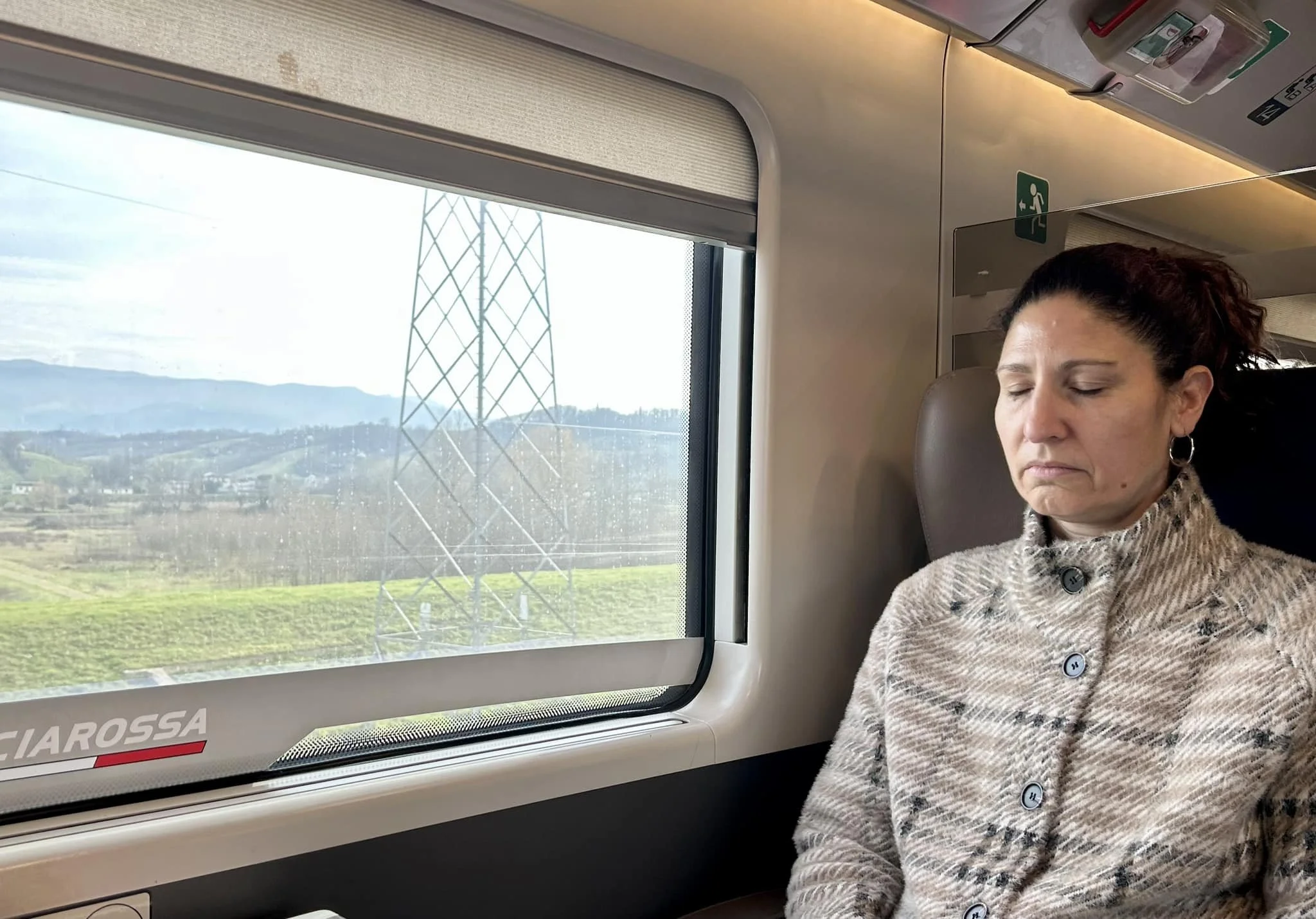
A Space Designed With Care
Some gatherings require particular attention to how they are shaped.
For people whose work involves responsibility, confidentiality, and ongoing care for others, entering a shared space carries weight. Professional roles do not simply fall away. They are lived in the body, carried into rooms, and quietly considered when deciding where to go and how much to bring forward.
This gathering was shaped with those realities in mind.
From the outset, care was given to privacy, boundaries, and the quality of the container itself. The intention centered on steadiness and care, with attention given to how the space itself would be held and experienced.
The rhythm of the evening followed the same sensibility that has guided other Kairos gatherings. Time moved slowly. Attention rested on presence, embodiment, and the subtle shifts that emerge when there is room to settle. Participation unfolded at an individual pace, with space for silence, reflection, and rest.
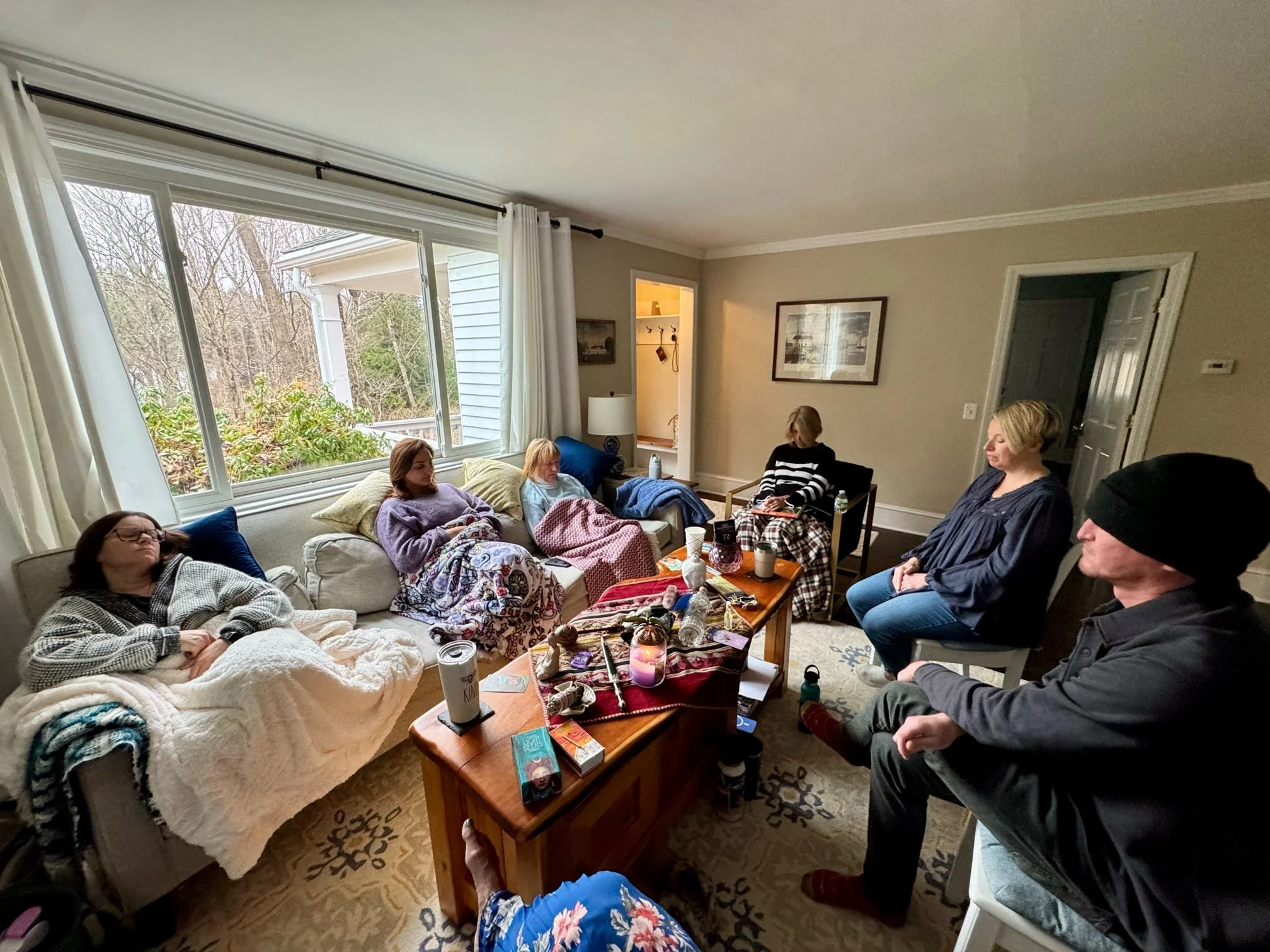
Seven clinicians chose to gather.
In a field where discernment and ethical responsibility are integral, that choice reflects the level of care placed on context and trust. It speaks to a shared understanding of what it means to step into a space where roles are understood and privacy is implicit.
For those who spend much of their professional lives holding space for others, moments of rest are often quiet and rare. This retreat offered such a moment. A pause held with intention, where nothing needed to be managed or explained.
The gathering reflected an ongoing way of working. One attentive to context, respectful of professional boundaries, and grounded in the belief that how a space is held shapes what becomes possible within it.
Some work speaks softly.
Its presence is felt in the care taken long before anything is said.
Manifestation Begins in the Body: Faith, Fear, and Becoming Receptive
Manifestation is often described as the ability to create reality through thought, intention, or desire. Many are taught to visualize what they want and chase it with enough discipline and belief until it appears.
But lived experience suggests something quieter and more embodied.
Manifestation is often described as the ability to create reality through thought, intention, or desire. Many are taught to visualize what they want and chase it with enough discipline and belief until it appears.
But lived experience suggests something quieter and more embodied.
Most people do not receive what they want.
They receive what they are able to hold.
Rethinking Manifestation
Manifestation is frequently misunderstood as wish fulfillment or positive thinking. In reality, it may have far more to do with alignment than desire.
We are not chasing our dreams.
Our dreams approach us when our inner state allows them to feel safe to arrive.
This is why “acting as if” is often misunderstood. Acting as if it is not about pretending or performing an outcome. It is about embodying the values, posture, and responsibility of the life one hopes to live.
Wealth, for example, is often mistaken for the ability to spend freely. Yet wealth is rarely created through consumption. It emerges through contribution, problem solving, and value.
Money follows value.
Outcomes follow identity.
When manifestation focuses only on results and bypasses embodiment, tension and frustration often follow.
Fear as a Barrier to Receiving
At the root of many blocked manifestations is fear.
Fear tightens the body.
Fear limits movement.
Fear signals danger.
A nervous system shaped by fear becomes guarded and resistant, even to the very things it desires. This resistance is rarely conscious. It is protective.
Like a frightened animal that appears aggressive but is simply defending itself, people often repel opportunities, support, or growth not because they do not want them, but because their body has learned that closeness or change once came at a cost.
Fear does not only block what we dislike.
It blocks everything.
Faith as an Embodied State
Faith is often framed as belief, but it is more accurately a state of being.
Faith is the capacity to move without complete certainty. It is the willingness to take steps without controlling every outcome. It is trust experienced in the body, not just held in thought.
Faith dissolves fear through experience.
Each time we take a step into uncertainty and survive, the nervous system learns something new. Movement becomes possible. Openness becomes safer.
This is how faith is built.
Not through affirmation, but through lived trust.
Two Ways People Learn to Move
Some people move through life believing that a higher power is guiding them. This belief allows them to risk, to fail, and to continue without collapse. Their trust does not eliminate difficulty, but it softens the weight of it.
Others move through life believing only in themselves. Often shaped by hardship, they rely on resilience, discipline, and self trust. They endure and overcome through strength.
Both paths create momentum.
But over time, faith placed beyond the self tends to be more sustainable.
Carrying everything alone eventually becomes heavy.
The most enduring form of faith often emerges as an integration. Responsibility paired with trust. Effort grounded in humility. Action without isolation.
Becoming Receptive
Manifestation may not be about forcing life to respond to our desires.
It may be about becoming receptive.
Soft enough to allow.
Steady enough to hold.
Open enough to be met.
As fear releases, posture changes. As posture changes, life comes closer.
Faith, in this sense, is not certainty about outcomes.
It is the willingness to move while trusting that something larger is holding the arc.
There’s something quietly powerful about watching children learn through play.
Recently, I had the opportunity to teach yoga at Joel Elementary School, working with different classes throughout the day. I wanted to introduce movement and breath in a way that felt light, engaging, and fun. A space where curiosity could lead and the experience could unfold naturally.
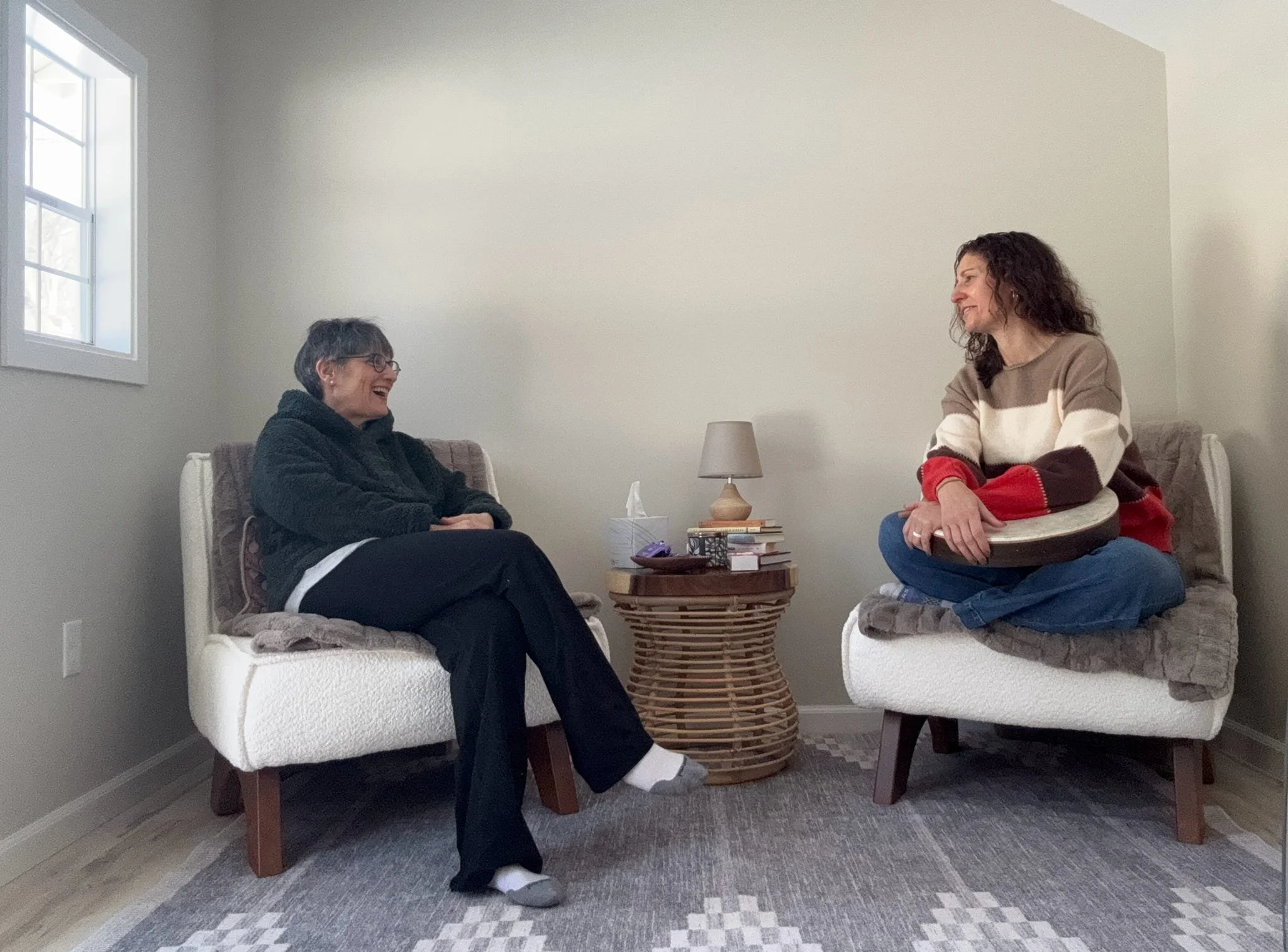
Recently, I had the opportunity to teach yoga at a local Elementary School, working with different classes throughout the day. I wanted to introduce movement and breath in a way that felt light, engaging, and fun. A space where curiosity could lead and the experience could unfold naturally.
I began by moving with them. I showed each pose, invited the kids to follow along, and named the poses as we practiced together. The classroom filled with movement, focus, and laughter. After some time, I began calling out the names of the poses and invited the kids to move on their own.
To my surprise, they remembered.
The kids moved their bodies into shape with ease. They recalled the names, listened closely, and participated fully. As we practiced, I offered encouragement, calling them by name and acknowledging their efforts. The energy in the room shifted into cooperation, engagement, and shared enthusiasm.
What stayed with me was their willingness to be present. When children feel seen and supported, participation comes naturally. Learning becomes something they step into rather than something they’re asked to perform.
Throughout the session, breath and movement were woven together. The kids experienced yoga as something active, playful, and accessible.
By the end of the day, the most meaningful part was the feeling they carried with them. A sense of enjoyment. A sense of ease. Something they might talk about when they get home or want to share with their parents, turning movement and breath into a moment of connection.
When healthy practices are introduced through play and encouragement, they become experiences worth remembering. Those early memories shape how we relate to our bodies, our breath, and our sense of well-being over time.
Sometimes the most meaningful work happens quietly. In classrooms filled with children moving, breathing, laughing, and discovering that caring for their bodies can feel good.
There was a time when healing was woven into daily life.
When struggle was not treated as a personal failure, but as something to be carried together. When people understood that pain moved through the body, the emotions, and the spirit long before it ever became a thought. They lived closer to the rhythms of nature, closer to one another, and closer to the unseen forces shaping their inner worlds.
Our ancestors endured realities far harsher than most of us will ever face. Loss was constant. Survival was uncertain. Yet they had ways of making sense of suffering. Through ritual, storytelling, and guidance, they learned how to move grief, fear, and confusion through the body instead of trapping it there. Healing was not rushed. It was witnessed.
Over time, much of that knowledge was set aside.
Modern life values efficiency, logic, and forward motion. We are taught to explain ourselves, to manage symptoms, to stay functional at all costs. Emotional and spiritual experiences are often reduced to something to analyze or suppress. Many of us learn how to keep going without ever learning how to integrate what we’ve been through.
The result is a quiet disconnection.
People arrive at moments in their lives where everything appears intact on the outside, yet something feels unsteady within. There is a sense of being fragmented, pulled between roles and expectations, unsure of what feels true anymore. Rest doesn’t quite restore. Achievement doesn’t quite satisfy.
Shamanic coaching works in this space.
It draws from traditions that understood the human being as layered and interconnected. This approach recognizes that emotional wounds, life transitions, and long-held patterns live beyond the intellect. They are carried in the body. In the nervous system. In the parts of us shaped by experiences we may not have words for.
Through integrative shamanic coaching, individuals are invited to engage with themselves more fully. To explore emotional blocks without forcing resolution. To acknowledge past wounds with care and presence. To reconnect with inner guidance that often gets drowned out by noise and urgency.
This work is not about escaping modern life. It offers a way to meet it with more clarity, groundedness, and depth. Ancient wisdom and modern coaching come together to support transformation that feels embodied and sustainable, rather than performative or rushed.
What many people discover through this process is a sense of wholeness returning. A feeling of being more at home in themselves. Growth begins to feel less like self-improvement and more like remembering.
In revisiting these older ways of understanding healing, we are not abandoning progress. We are restoring balance. And in doing so, we create space for meaningful change that reaches beyond the surface and into the core of who we are.